Understanding the difference is the key to ensuring your assets stay labeled in tough environments.
[caption id="" align="aligncenter" width="1464"]
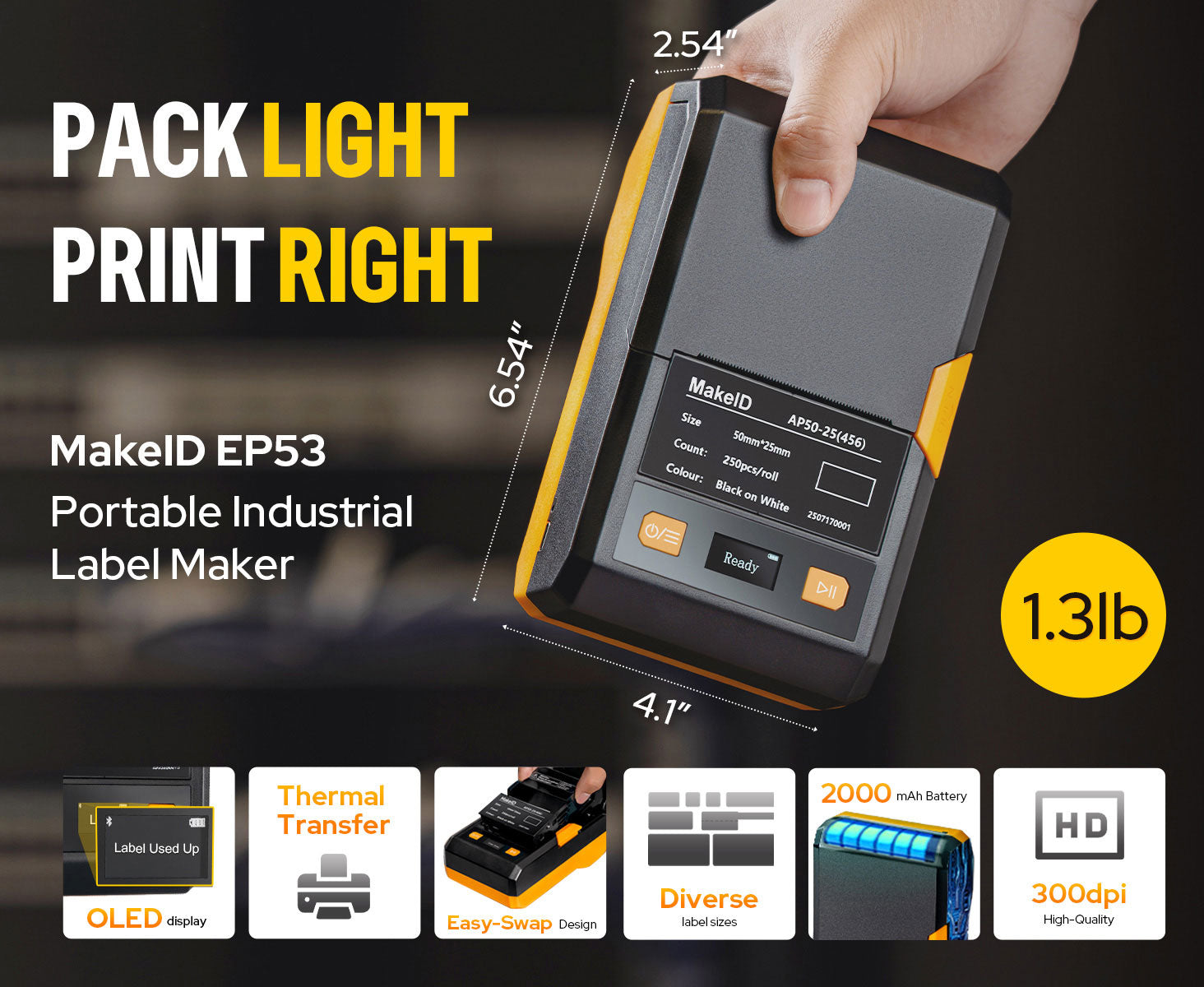 MakeID EP53 Portable Industrial Label Maker[/caption]
1. High Heat: The "Blackout" Effect
Standard Direct Thermal labels use heat-sensitive paper. When exposed to high temperatures (like a hot car interior or industrial machinery), the entire label can turn black, erasing your information.
Survival Limit: Usually starts fading or darkening at 50°C (122°F).
The Solution: Use Thermal Transfer labels with a Resin Ribbon. These are "baked" onto the surface and can withstand temperatures exceeding 150°C (302°F).
2. Outdoor Weather: UV and Moisture
Direct thermal labels are notorious for yellowing in the sun and disintegrating in the rain.
UV Rays: Sunlight acts like a slow heater, eventually "printing" the whole label until it’s unreadable.
Moisture: Paper-based labels will peel or pulp when exposed to rain or humidity.
The Solution: Use Synthetic (BOPP/PET) labels. These plastic-based materials are waterproof and UV-resistant.
Summary Checklist for Durability
| Feature | Direct Thermal | Thermal Transfer (Resin) |
| Heat Resistance | Low (Turns Black) | High (Up to 150°C+) |
| UV/Sunlight | Fades/Darkens quickly | Long-lasting |
| Water/Chemicals | Poor | Excellent (with Synthetic media) |
| Best Use | Shipping labels, Receipts | Outdoor assets, Industrial parts |
Pro Tip: If you can scratch the label with your fingernail and it leaves a black mark, it’s Direct Thermal and will not survive outdoors!